
If you are a midlife woman, you definitely know your macros. You track protein, carbs, and fat down to the gram. You know that hitting your macros isn’t about one perfect meal it’s about consistency, day in and day out. In life, consistency is where the magic happens.
Sleep has macros too, and this isn’t something I just made up. Sleep scientist Dr. Matthew Walker, the UC Berkeley researcher behind Why We Sleep, teaches that good sleep comes down to four essential components he calls the four macros of sleep: Quantity, Quality, Regularity, and Timing. Dr. Walker does not mince his words, and hitting all four isn’t optional, it’s what actually determines whether your sleep is doing its job. It’s important to note here that a fancy sleep monitoring tool is not needed. You know how you feel when you’ve slept well. You do not need a monitor to tell you this. Nursing 101 has always been trust the patient, not the monitor. The same applies here. Trust your body and how you feel.
In my experience, especially for women, I feel Dr. Walker is missing an important macro. So five macros, not four, are what actually move the needle for midlife sleep specifically. This macro is one we are all trying to improve, often with little success. I have found that once you start to master the first four, the fifth will naturally fall into place.
Remember, this process is going to take time, so give yourself grace. Real, lasting sleep change could take months to undo years of circadian neglect. Once you are consistent, like dominoes, all the pieces will fall into place. Starting with your circadian rhythm, then your hormones, your energy, your mood, your cravings, and much more suddenly come into alignment. This is exactly the work I do with the women I coach one-on-one. I am the guide, they are the masters.
Just like nutrition, you don’t need to master the entire system before you start hitting your numbers. You just need to know what your macros actually are. So let’s get into it — the five macros every midlife woman should be focusing on to build a foundation for better sleep

Macro #1: Get Outside
Light is the strongest signal your circadian clock responds to, and it’s a core part of what Walker calls Timing — how well your sleep aligns with your body’s natural rhythm. However, it does not stop at morning light. This is about your relationship with light across the day. From sunrise to sunset, our eyes and skin are collecting light data.
Get outside first thing in the morning.
Everything starts with sunrise and morning light. This is the anchor for your circadian rhythm, including how easily you will fall asleep that same night. A few minutes outside, no sunglasses, ideally within an hour of waking, is enough to start.
Get natural light during the day when you can.
Your circadian clock isn’t just reading one morning signal — it is constantly tracking data across the entire day. Time outside at midday, even a few minutes, reinforces the rhythm your morning light started.
Finally, sunset.
As natural light fades in the evening, your body is supposed to start its own wind-down. This is where most women are wired and tired. It’s okay if that is you — you are learning tools to fix that. Step outside, and anchor your circadian rhythm instead of letting indoor, artificial light create biological chaos and confusion.
Macro #2: Artificial Light
Once you understand the importance of natural light, the next macro is controlling artificial light signals after dark.
Dim the lights an hour before bed.
LED lights today are bright, blue-heavy, and not anywhere near what is natural for our biology. Overhead lamps, phone screens, and TVs all give your brain the same signal the noon sun does: stay alert. Dimming the lights around your home in the hour or two before bed reduces that signal and gives your body room to start its natural melatonin rise. Using candles, incandescent bulbs, or halogen bulbs will help more — think firelight, anything amber colored.
Sunrise to sunset during the day, and managing artificial light after dark — simple ways your first two macros work together. These things all work simultaneously so your body can make its own intrinsic melatonin.
Macro #3: Environment
Your bedroom atmosphere is its own macro. This is where Walker’s Quality macro — the depth and restorative nature of your sleep — comes into play. Two levers matter most here: temperature and darkness.
Take a warm bath or shower, 1 to 2 hours before bed.
This one feels counterintuitive, but it works: a warm bath doesn’t cool you down directly. It warms your skin, which widens the blood vessels in your hands and feet (vasodilation). That pushes warm blood to your body’s surface, where it can radiate out quickly once you’re out of the water, producing a real drop in your core temperature shortly after. It is that temperature drop that is part of what triggers sleep onset.
Timing here matters more than you’d expect. Aim for 1 to 2 hours before bed, not right before, as your body needs a few minutes after the bath for the cooling effect to kick in.
Keep the room cool and dark.
Falling asleep isn’t just a mental process — it’s a biological one. Your core body temperature naturally drops as part of falling asleep, and a room that’s too warm or too bright can interrupt that drop before it’s finished. Strive for somewhere in the 65 to 68°F range as a starting point. Cooler here helps sleep onset. Midlife women are no strangers to hormonal changes and night sweats, so let how you actually feel guide the exact number. Next, keep your room dark with blackout curtains or a sleep mask. A dark room helps prevent melatonin disruption.
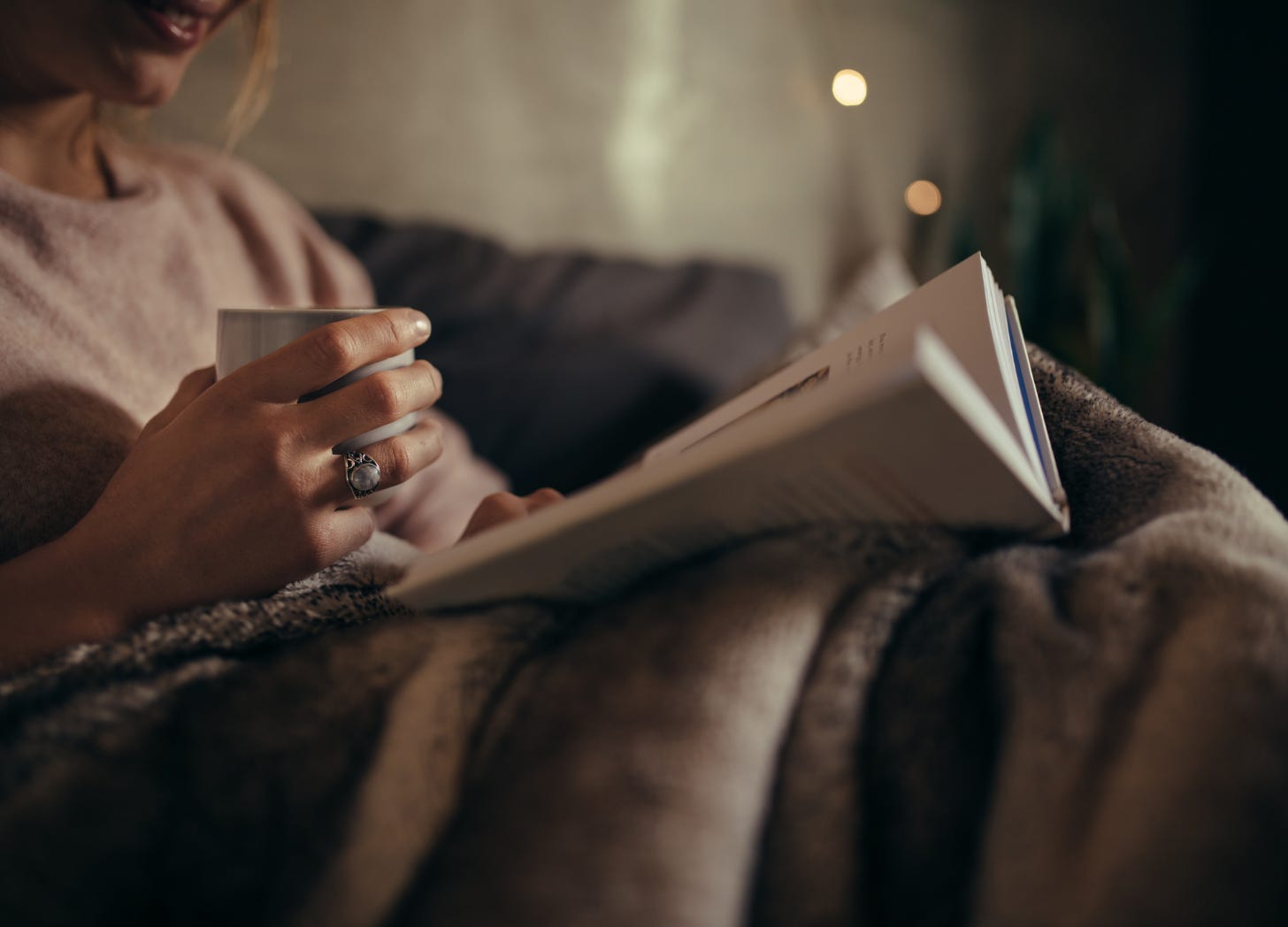
Macro #4: Routine
Our bodies love routine. Consistency is the glue of your day, not just your bedtime. This is Walker’s Regularity macro, and of the four he names, it’s the one most women underestimate.
Pick one wake-up time and stick to it, even on weekends.
Of everything here, this one habit is what I want you to keep long after the others feel automatic. Routine does more for your sleep than you think. It’s what lets your internal clock stop resetting itself every few days. It is what makes your morning light exposure land at the same time daily, strengthening that signal from Macro #1.
Keep your eating and exercise schedule consistent too.
Your circadian clock doesn’t just respond to light. There are several levers you can pull here, including when you eat and when you move. Meals and workouts at wildly different times from day to day send your body mixed cues about what time it thinks it is. Create rituals around your eating and exercise times — make them special, more than routine. By doing this, you will help your sleep and everything else fall into sync with them.
(Walker’s fourth macro, Quantity — simply how many hours you’re getting — matters here too. Most women need somewhere in the 7 to 9 hour range, and that number doesn’t shrink just because midlife gets busier. If Macros 1 through 4 are dialed in and you’re still short on hours, that’s the schedule conversation worth having.)
Macro #5: Stress
This is the macro I added that you won’t find in Walker’s research, mainly because it’s less about sleep physiology and more about the reality of midlife life. Let’s talk about stress.
Identify and actively manage your tension before bed.
Hopefully, if you are locked in on Macros 1–4, your body will do some of the heavy lifting on this one. Remember, when you align your circadian rhythm, your hormones, mood, and energy will follow. If you are making intrinsic melatonin, then the natural melatonin/cortisol cycle will come back into balance. When this happens, your nervous system gets the signal to relax. Your parasympathetic nervous system can now do its job. However, if after all of the above you are still wired and tired, implement a nightly unwind ritual. It doesn’t need to be elaborate: a few minutes of slow breathing, a short walk, journaling, a brain dump, or simply naming what’s on your mind before bed all count. The goal isn’t to eliminate stress — it’s to signal to your body that it’s safe to let go of it for the night.
It Will Take Time
Hitting these five macros is a real, meaningful start to better sleep. For many women, it’s the first time anyone has begun to explain the why behind their sleep instead of just handing them a list or prescribing a medication. Macros are the foundation, not the finish line. The deeper work — the hormonal shifts of perimenopause and menopause, the stress patterns that have kept you wired at night, the habits that took years to build — needs real support to undo. So start here, and remember to give yourself grace in the process. Subscribe to keep learning more ways to improve, and/or to work with me one-on-one. If you get your sleep macros dialed in and want a guide for the rest of it, that’s exactly what I’m here for.
Align your day. Restore your night.

This post reflects an educational, general-audience summary of sleep science. It is not a substitute for individualized medical advice.
References
Walker, M. Why We Sleep: Unlocking the Power of Sleep and Dreams. Scribner, 2017.
Walker, M. “Dr. Matt Walker: Protocols to Improve Your Sleep.” Huberman Lab, 2024. https://www.hubermanlab.com/episode/guest-series-dr-matthew-walker-protocols-to-improve-your-sleep
Blume, C., Garbazza, C., & Spitschan, M. “Effects of light on human circadian rhythms, sleep and mood.” Somnologie, 2019. https://pmc.ncbi.nlm.nih.gov/articles/PMC6751071/
Cajochen, C., et al. “Evening exposure to a light-emitting diode (LED)-backlit computer screen affects circadian physiology and cognitive performance.” Journal of Applied Physiology, 2011. https://journals.physiology.org/doi/full/10.1152/japplphysiol.00165.2011
Haghayegh, S., et al. “Before-bedtime passive body heating by warm shower or bath to improve sleep: A systematic review and meta-analysis.” Sleep Medicine Reviews, 2019. https://www.sciencedirect.com/science/article/abs/pii/S1087079218301552
Kräuchi, K. “The human sleep-wake cycle reconsidered from a thermoregulatory point of view.” Physiology & Behavior, 2007. https://pubmed.ncbi.nlm.nih.gov/17049364/
Sleep Foundation. “The Best Temperature for Sleep.” Reviewed 2025. https://www.sleepfoundation.org/bedroom-environment/best-temperature-for-sleep
A nice succinct article with a short list! Managing these macros and implementing them into daily life just became simpler. I track food macros, so this list is easy for me to understand. Thanks!!